Children with spinal muscular atrophy (SMA) face progressive muscle weakness and loss of motor function. Severe types can lead to early death. But compared to many rare diseases, SMA now has approved therapies, some covered by insurance, and others in clinical trials. This guide reviews all available SMA drugs, their mechanisms, and how to choose among them. Information is current as of June 12, 2024.

Context
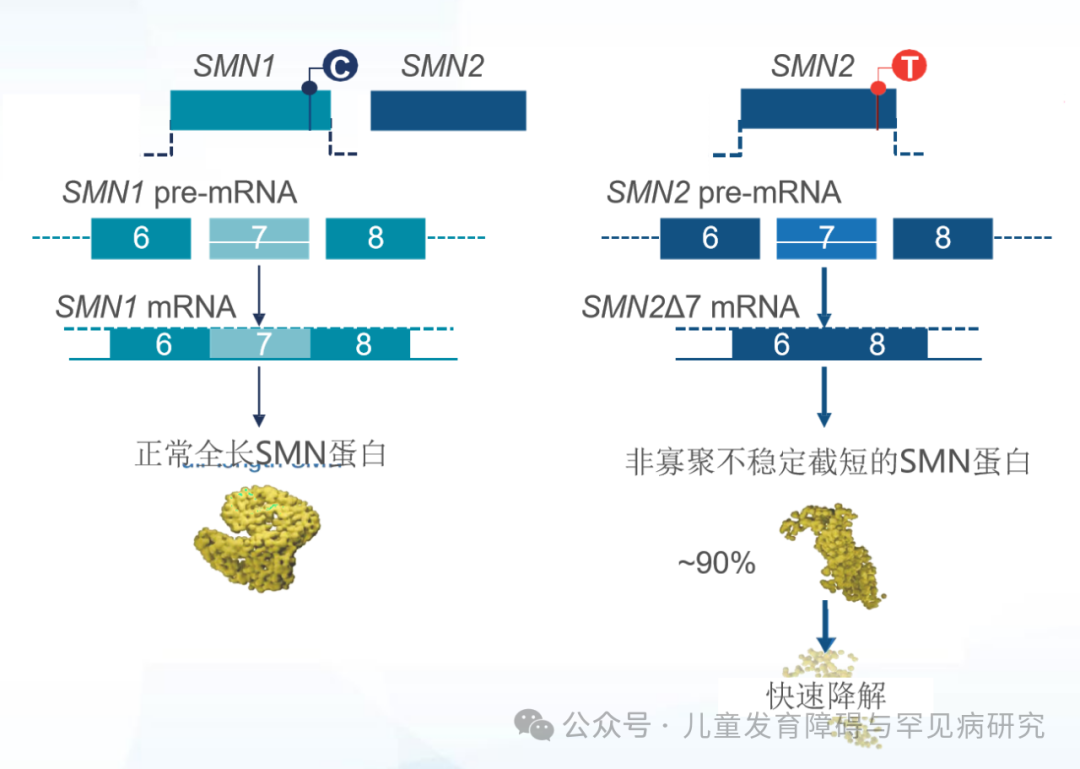
SMA is caused by homozygous deletion of the SMN1 gene, leading to insufficient SMN protein. A homologous gene, SMN2, produces some functional SMN protein but only about 10% of full-length protein. Current therapies target either SMN-dependent or SMN-independent pathways.
1. SMN-Dependent Therapies
A. SMN1 Gene Replacement or Correction
Gene therapy delivers a functional SMN1 gene via a viral vector, typically AAV9, in a single intravenous dose. The only approved gene therapy is Zolgensma (AVXS-101), approved by the FDA in May 2019 for children under 2 years. Over 3,700 patients have received it globally. The most serious adverse effect is acute liver failure. Cost: $2.125 million per dose. Not yet approved in China. Several Chinese gene therapies are in clinical trials: EXG001-307, GC101, and SKG0201.
B. SMN2 Gene Modulation
These drugs modify SMN2 splicing to increase full-length SMN protein. They require long-term use.
1. Nusinersen (Spinraza) – Approved in 2016 for all ages and types. Administered intrathecally: 4 loading doses in the first 2 months, then maintenance every 4 months. Over 14,000 patients treated globally. In China, approved in 2019, covered by insurance since 2022. Cost after insurance: ~40,000 RMB first year, ~20,000 RMB annually thereafter.
2. Risdiplam (Evrysdi) – Oral liquid, daily dosing. Approved for patients aged 16 days and older. Dose depends on weight and age. Over 15,000 patients treated globally. In China, approved in 2021, covered by insurance since 2023. Cost after insurance: ~30,000 RMB per year.
2. SMN-Independent Therapies
A. Muscle Protection
These drugs aim to preserve muscle mass and function. They may be used with SMN-dependent therapies.
- Apitegromab (SRK-015): Monoclonal antibody inhibiting myostatin. Phase 2 trials showed improved motor function in type 2 and 3 SMA. Phase 3 trial ongoing (expected completion Dec 2024).
- Taldefgrobep alfa (BHV-2000): Myostatin inhibitor. Phase 3 trial ongoing (expected Jan 2025).
- GYM329 (RO7204239): Monoclonal antibody targeting myostatin precursor. Phase 2/3 trial ongoing (expected Jun 2026).
- NMD670: Oral ClC-1 inhibitor. Phase 2 trial in type 3 SMA adults ongoing (expected Dec 2024).
B. Neuroprotection
No neuroprotective drugs are in clinical trials for SMA yet. Potential targets include Plastin 3 and Coronin 1C, which stabilize the cytoskeleton, and stem cell transplantation.
C. Other Drugs
- Salbutamol: Beta-2 agonist, may increase SMN protein. Limited evidence for motor improvement.
- Valproic acid: HDAC inhibitor, may improve gross motor function but not respiratory function. A phase 2 trial showed no survival benefit in type 1 SMA.
3. Drug Selection Strategy
A. Approved Drugs
Both nusinersen and risdiplam are Grade I recommended in the 2023 Chinese guidelines. They have similar efficacy and safety. Key differences:
| Feature | Nusinersen | Risdiplam | Zolgensma |
|---|---|---|---|
| Drug type | Antisense oligonucleotide | Small molecule | Gene therapy |
| Mechanism | Modifies SMN2 splicing | Modifies SMN2 splicing | Replaces SMN1 |
| Indication | All types, all ages | All types, ≥16 days | All types, <2 years |
| Route | Intrathecal injection | Oral | IV or intrathecal |
| Frequency | 4 loading doses, then every 4 months | Daily | Once |
| Availability in China | Yes, in prefecture-level hospitals | Yes, monthly prescription | No |
| Annual cost (after insurance) | ~20,000–40,000 RMB | ~30,000 RMB | — |
Q: Which drug should I choose? A: Both are effective. The main difference is administration: nusinersen requires lumbar puncture every 4 months; risdiplam is taken daily at home. Choose based on child's tolerance, convenience, and family preference.
Q: Will my child walk after treatment? A: Drugs can halt progression and may improve motor function. Some patients achieve new milestones, but improvement is gradual. Early treatment yields better outcomes.
Q: Should I wait for gene therapy? A: No. Early treatment is critical. Start with an available DMT now; gene therapy may be an option later.
Q: Can I combine nusinersen and risdiplam? A: No evidence supports combining DMTs. Safety and efficacy are unknown. Trials are ongoing.
B. Clinical Trial Drugs
Several gene therapies are in clinical trials in China:
| Drug | Phase | Population | Status |
|---|---|---|---|
| OAV101 (Zolgensma) | III | Type 2, 2–18 years | Recruiting complete |
| EXG001-307 | I/II | Type 1, ≤180 days | Recruiting |
| GC101 | I/IIa | Type 1, >9 months | Recruiting |
| GC101 | I/IIa | Type 2 | Recruiting complete |
| GC101 | I/II | Type 3, ≥2 years | Not yet recruiting |
| SKG0201 | IIT | Type 1, ≤180 days | Recruiting |
| Risdiplam | RWR | All types | Recruiting |
Q: Are clinical trials risky? A: Yes, especially for unapproved drugs. Risks decrease with later phases. Post-market studies are safer.
Q: Why do many families seek trials? A: Potential early access, better outcomes, and reduced financial burden.
Q: How to decide? A: Check eligibility criteria. For post-market trials, participation is recommended. For pre-market trials, weigh risks and benefits carefully.
What This Means for International Patients
SMA treatment has advanced rapidly. Three SMN-dependent therapies are approved globally, with two available in China at affordable costs. Gene therapy trials offer hope for a one-time cure. Early diagnosis and treatment remain the most critical factors for good outcomes.
FAQ
Q: What is the best treatment for SMA? A: Both nusinersen and risdiplam are effective. The choice depends on patient age, disease type, and administration preference.
Q: How much does SMA treatment cost in China? A: After insurance, nusinersen costs about 20,000–40,000 RMB per year; risdiplam about 30,000 RMB per year.
Q: Is gene therapy available in China? A: Zolgensma is not yet approved. Several Chinese gene therapies are in clinical trials.
Q: Can adults with SMA benefit from treatment? A: Yes, nusinersen and risdiplam are approved for all ages.
Q: What are the side effects? A: Nusinersen may cause headache, back pain, and post-lumbar puncture syndrome. Risdiplam may cause diarrhea, rash, and fever. Zolgensma carries risk of acute liver failure.
Q: How long does treatment last? A: Nusinersen and risdiplam require lifelong treatment. Gene therapy is a one-time dose.
Next Steps
If your child has been diagnosed with SMA, consult a specialist at a major hospital with experience in SMA care. Consider starting DMT promptly. For clinical trial opportunities, check eligibility criteria and discuss with your doctor. Early intervention offers the best chance for improved outcomes.